

2026 Ford Transit® Passenger Van in Southeast Michigan
The 2026 Ford Transit® Passenger Van offers seating for up to 15 passengers across two trims (Passenger Van XL and Passenger Van XLT), three roof heights (low, medium, and high), and two body lengths (long and extended). Two engine options pair with rear-wheel drive or available Intelligent All-Wheel Drive. Maximum towing capacity reaches 4,500 pounds, and maximum payload reaches 3,475 pounds with the right configuration.
- Overview
- Models
- Seating
- Roof Heights & Lengths
- Engines & Drivetrain
- Towing & Payload
- Technology
- Pricing
- How to Buy
- Frequently Asked Questions
What is the 2026 Ford Transit® Passenger Van?
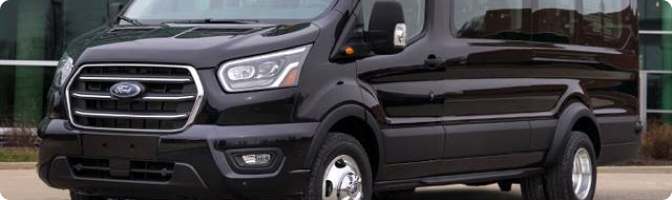
The 2026 Ford Transit® Passenger Van is Ford's full-size, body-on-frame passenger van. It's offered in two trims (Passenger Van XL and Passenger Van XLT) and configured across three roof heights and two body lengths to fit different group-transport, shuttle, and large-family use cases. Standard equipment across both trims includes the 10-speed automatic transmission with SelectShift®, electric power-assisted steering, four-wheel anti-lock disc brakes, push-button start, SYNC® 4 with a 12-inch center touchscreen, and Ford Co-Pilot360® driver-assist features. Rear-wheel drive is standard, with Intelligent All-Wheel Drive available across the lineup. The Transit is positioned in Ford's commercial vehicle line alongside the Transit Cargo Van; broader Ford new-vehicle research is covered on the Ford Model Research page.
What models are available for the 2026 Ford Transit® Passenger Van?
The 2026 Transit® Passenger Van comes in two trims. The XL is the entry-tier configuration with the standard equipment set buyers need for organizational and shuttle use. The XLT adds upgraded driver-assist technology, exterior treatments, and interior comfort.
| Trim | Starting MSRP | Standard Engine | Standard Drivetrain | Defining Role |
|---|---|---|---|---|
| Transit® Passenger Van XL | High-$50Ks | 3.5L PFDi V6 | Rear-Wheel Drive (Intelligent AWD available) | Configuration-tier entry |
| Transit® Passenger Van XLT | Low-$60Ks | 3.5L PFDi V6 | Rear-Wheel Drive (Intelligent AWD available) | Equipment and tech step-up |
Transit® Passenger Van XL

The XL opens the lineup with the 3.5L PFDi V6 engine standard and the 3.5L EcoBoost® V6 available. The 10-speed automatic transmission with SelectShift® comes standard. Rear-wheel drive is standard, with Intelligent All-Wheel Drive available. A 50/50 hinged rear door with 180-degree opening, a sliding passenger-side door, a body-color front bumper with carbon black lower valence, and 16-inch silver steel wheels with hubcaps cover the exterior.
Inside, the medium center console with integrated shifter and dual cupholders, SYNC® 4 with the 12-inch center touchscreen, push-button start, vinyl floor covering front and rear, manual reclining bucket front seats, the Power Equipment Group with remote keyless entry, and tri-zone air conditioning all come standard. Ford Co-Pilot360® driver-assist is standard, including Lane-Keeping System, Pre-Collision Assist® with Automatic Emergency Braking, Post-Collision Braking, and Auto High-Beam Headlamps.
Transit® Passenger Van XLT

The XLT carries the XL's powertrain and platform and adds an equipment, technology, and trim step-up. The 50/50 hinged rear door supports an available 253-degree opening for wider cargo and access. The large center console adds additional storage to the integrated shifter and dual cupholders. A body-color front bumper, black HID headlamps, wiper-activated headlamps, front fog lamps, and a honeycomb mesh grille with chrome surround set the exterior apart.
Power-folding heated mirrors with turn signals replace the XL's manual-folding mirrors. Inside, carpet floor covering replaces vinyl up front, rear-seat recline and inboard armrest become available beyond the last row, and the available 10-way power heated driver and passenger seats step up the comfort tier. Close Assist on the side sliding door, Intelligent Access with push-button start, and Ford Co-Pilot360® Assist 2.0 are standard. Ford Co-Pilot360® Assist 2.0 adds Adaptive Cruise Control, Blind Spot Information System (BLIS®) with Cross Traffic Alert, and a 360-Degree Camera to the Co-Pilot360® driver-assist suite.
How many passengers does the 2026 Transit® seat?
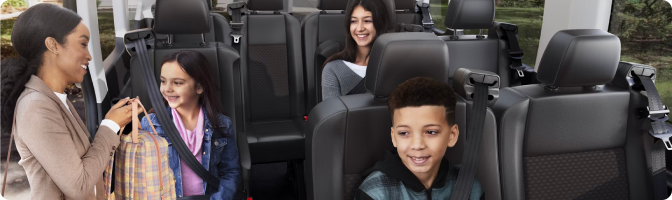
Seating capacity scales by body length and configuration. The Long Length Passenger Van comes standard with 12-passenger seating in a four-row layout (2 seats in row 1, 3 in row 2, 3 in row 3, 4 in row 4). The Extended Length Passenger Van comes standard with 15-passenger seating in a five-row layout (2-3-3-3-4). Both configurations are offered across the XL and XLT trims.
15-passenger seating is also available as an option on the Long Length Passenger Van for buyers who need maximum seating capacity in the shorter body. 1-passenger and 2-passenger configurations are available for buyers who want cargo capacity behind a smaller passenger area, paired with a Builder's Prep Package or Upfitter Package for further customization. The "Add a Row, Lose a Row" framing in Ford's overview reflects the modular seating layout that lets buyers configure the cabin for the actual passenger count and cargo balance their use case requires.
Driver and front passenger seats are manual reclining bucket seats with adjustable headrests across the lineup. The XL offers Dark Palazzo Gray cloth standard with the 2-way manual driver and 2-way manual passenger configuration. The XLT offers Dark Palazzo Gray cloth with manual heated driver and passenger seats standard, and 10-way power heated driver and passenger seats are available.
What roof heights and body lengths are available for the 2026 Transit®?

The 2026 Transit® Passenger Van is offered in three roof heights and two body lengths. The combination of height and length is the central configuration decision for most buyers.
Roof heights
- Low Roof (82.4 inches): Fits standard parking garages and lower clearance scenarios. The right pick for buyers who park in a garage daily or operate a shuttle that frequently passes under low overhangs.
- Medium Roof (99.2 inches): Adds interior height for cargo capacity and seated comfort while staying compatible with most commercial parking and entry clearances.
- High Roof (up to 107.7 inches): Offers standing room inside the cabin, which matters for buyers who load and unload passengers or cargo regularly without having to crouch. The 253-degree rear door opening is available with the High Roof for wider cargo access.
Body lengths
- Long Length (235.5 inches): A more maneuverable footprint with a tighter turning radius. 12-passenger seating standard, 15-passenger seating available.
- Extended Length (263.9 inches): 28.4 inches longer than the Long Length body. 15-passenger seating standard, with additional cargo capacity behind the last row of seats.
Roof height and body length combinations cover six base footprints (three roofs in either body length). The right combination depends on three practical factors: where the van will be parked daily (garage clearance), how passengers and cargo will move in and out (high roof for standing access; lower roofs for compact use), and how many passengers and how much cargo need to fit at peak load. Specific exterior heights vary by configuration; final figures are confirmed at the time of order.
What engines and drivetrain options are available for the 2026 Transit®?
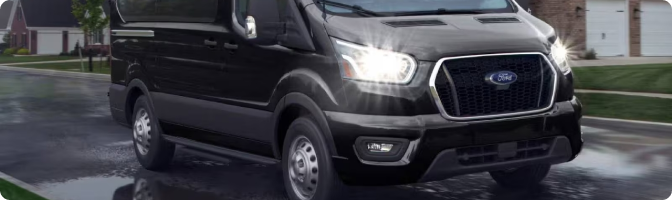
The 2026 Transit® Passenger Van offers two engine options across both trims.
| Engine | Type | Output | Trim Availability |
|---|---|---|---|
| 3.5L PFDi V6 | Port Fuel and Direct Injection V6 | Approximately 275 hp / 260 lb-ft | Standard on XL and XLT |
| 3.5L EcoBoost® V6 | Twin-turbocharged V6 | Approximately 310 hp / 400 lb-ft | Available on XL and XLT |
Both engines pair with the 10-speed Automatic Overdrive transmission with SelectShift®. The 3.5L PFDi V6 is the value-tier engine with strong torque for daily passenger and cargo loads. The 3.5L EcoBoost® V6 adds the twin-turbocharged power output that buyers who tow or operate at higher loaded weights typically want.
Rear-wheel drive is standard across the lineup. Intelligent All-Wheel Drive is available across both trims and engine choices, providing better traction on snow, gravel, and wet surfaces relevant to Southeast Michigan winter operation. The Intelligent AWD system is integrated into the platform without raising the load floor or seat height, so seating capacity and cargo dimensions stay consistent. A 250-amp alternator and an engine block heater (400W) are standard equipment on both engines, supporting the higher-load electrical demands and cold-weather starting that commercial van use often requires.
The standard fuel tank holds 25 gallons. An available 31-gallon Extended Range Fuel Tank supports longer routes between fill-ups, particularly relevant for shuttle and tour operations that cover high daily mileage.
What can the 2026 Ford Transit® tow and haul?
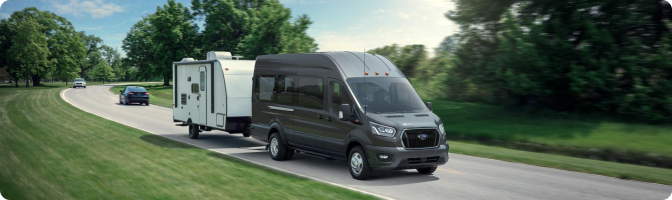
The 2026 Transit® Passenger Van tows up to 4,500 pounds with the available Heavy-Duty Trailer Tow Package and carries up to 3,475 pounds of payload with the right configuration. Specific towing and payload figures vary by trim, engine, body configuration, and drivetrain.
The Heavy-Duty Trailer Tow Package is optional on both XL and XLT and adds the wiring, cooling, and trailer connection equipment needed for the maximum tow rating. Tow/Haul Mode with trailer wiring provisions and an optional Trailer Brake Controller are also offered, supporting buyers who tow trailers regularly. A rear recovery tow hook is standard.
Payload capacity supports buyers who carry passenger groups plus equipment regularly: sports teams with gear, school groups with luggage, tour operators with passenger bags, churches with sound and AV equipment. The Extended Length body adds more cargo space behind the last row of seats than the Long Length body, which becomes important when running at full passenger capacity with significant cargo.
What technology and safety features come with the 2026 Transit®?
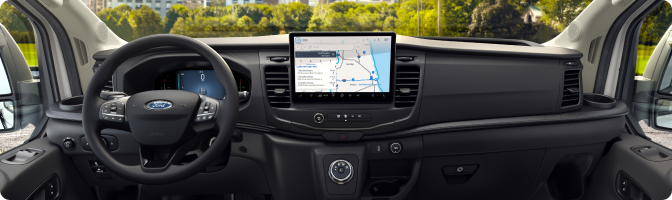
Every 2026 Transit® includes SYNC® 4 with a 12-inch center touchscreen, wireless Apple CarPlay® and Android Auto™ compatibility, AM/FM stereo, Bluetooth, dual USB ports, enhanced voice recognition, and the Ford Connectivity Package. SYNC® 4 supports over-the-air updates so the system stays current after delivery. A 5G embedded modem is standard and supports a Wi-Fi hotspot for up to 10 devices. The Ford Connectivity Package is included for one year and provides connected services, app integration, and route planning. Telematics Essentials supports fleet management workflows for organizational buyers tracking vehicle utilization. An 8-inch cluster display covers tachometer, fuel level, and coolant temperature. USB ports run at 5 amps with one located in each row of the cabin.
Ford Co-Pilot360® comes standard across the lineup and includes Lane-Keeping System, Pre-Collision Assist® with Automatic Emergency Braking, Post-Collision Braking, Auto High-Beam Headlamps, and front and rear parking sensors. Ford Co-Pilot360® Assist 2.0 is standard on the XLT and optional on the XL; it adds Adaptive Cruise Control, Blind Spot Information System (BLIS®) with Cross Traffic Alert, and a 360-Degree Camera. A Tire Pressure Monitoring System (TPMS) is standard.
Active safety equipment runs universally. Driver and passenger airbags, Safety Canopy® side-curtain airbags, Securilock® Passive Anti-Theft System with engine immobilizer, the SOS Post-Crash Alert System™, and autolocking drive away with crash unlocking come standard. A digital rearview mirror is available on both trims for buyers who carry passenger or cargo loads that block the standard rearview mirror.
Ford Driving TechnologyWhat does the 2026 Ford Transit® cost in Michigan?

The 2026 Transit® Passenger Van XL opens in the high-$50Ks. The XLT opens in the low-$60Ks. Final pricing depends on configuration (roof height, body length, engine, drivetrain, seating layout), destination charge, taxes, registration, and any current Specials or eligibility programs.
Lease and finance Specials are updated monthly at Dorian Ford. The pages below cover any current 2026 Transit® offers running this month.
Section 179 of the federal tax code may allow certain commercial buyers to deduct the cost of a qualifying business vehicle in the year of purchase rather than depreciating it over multiple years. Eligibility depends on how the vehicle is used, the buyer's tax situation, and current federal program rules. Specific guidance on Section 179 as it applies to Ford commercial vehicles, including the Transit Passenger Van, is on the Section 179 Tax Deduction page.
Additional eligibility-based programs may layer onto a 2026 Transit® purchase. A/X/Z Plan pricing is offered through a Ford program for eligible Ford Motor Company employees, retirees, and partner-company employees, with the qualification rules detailed on the A/X/Z Plan page. Military service members, first responders, and current college students or recent graduates each qualify for their own program with its own rules. Fleet customers and commercial buyers may have access to additional Ford Motor Company programs depending on the size and structure of the purchase.
How do I buy or lease a 2026 Transit® at Dorian Ford?
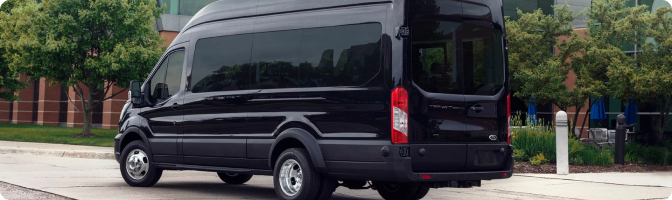
Three paths lead to a 2026 Transit® at Dorian Ford: shop the in-stock Transit® Passenger Van inventory, custom-order a configuration through the Ford build tool, or schedule a test drive before locking in the configuration.
Pre-approval at Dorian Ford runs as a soft credit pull, so it doesn't affect your score. Commercial and fleet financing often involves different paperwork from individual buyer financing, and pre-approval lets you confirm the financing structure ahead of the configuration decision.
Get Pre-ApprovedThe configuration matrix on the Transit Passenger Van means most buyers benefit from custom-ordering rather than picking from in-stock inventory. The Ford build tool puts together a custom order to your specific roof height, body length, engine, drivetrain, seating layout, and option package combination.
Custom Order ToolTest drives are by appointment. The right test drive for a Transit Passenger Van often involves driving the actual configuration you're considering (or one close to it) so the size and handling are familiar before the order goes in.
Schedule a Test DriveTrade evaluations can be handled online for a starting estimate or in person for a final number.
Trade-In ValueFor buyers weighing whether to lease the Transit or finance the purchase, the Buying vs. Leasing guide covers the financial trade-offs that often matter more for commercial vehicles than for personal-use vehicles. High-mileage buyers and operators who run vans hard may also want to look at Ford Protect Extended Service Plans for coverage beyond the standard warranty period.
Buying a Transit at Dorian Ford starts with working through the configuration matrix. Roof height, body length, drivetrain, engine, and seating layout each have implications for how the van fits into your operation, your parking, and your daily route. Dorian Ford's Service Department handles ongoing maintenance after delivery, and the Collision Center handles body work for any make and model. The goal is to confirm the configuration before the order goes in, so the van that arrives matches the spec you actually need.
What else should I know about the 2026 Ford Transit® Passenger Van?
The questions below cover details shoppers often want to confirm before scheduling a test drive or starting a custom order.
The XL and XLT share the same 3.5L PFDi V6 standard engine, 10-speed automatic transmission, and rear-wheel-drive platform with Intelligent All-Wheel Drive available. The XLT differs in equipment and technology: it includes Ford Co-Pilot360® Assist 2.0 standard (Adaptive Cruise Control, BLIS® with Cross Traffic Alert, 360-Degree Camera), power-folding heated mirrors, black HID headlamps with front fog lamps, wiper-activated headlamps, the large center console with additional storage, carpet floor covering up front, manual heated driver and passenger seats standard, available 10-way power heated front seats, Close Assist on the side sliding door, and Intelligent Access with push-button start. The XL provides the configuration-tier entry; the XLT adds the equipment, comfort, and technology step-up.
The 2026 Transit® Passenger Van seats from 1-2 passengers up to 15. The Long Length body comes standard with 12-passenger seating in a four-row layout (2-3-3-4). The Extended Length body comes standard with 15-passenger seating in a five-row layout (2-3-3-3-4). 15-passenger seating is also available as an option on the Long Length body, and 1-passenger and 2-passenger configurations are available on either body length for buyers who need cargo capacity behind a smaller passenger area.
The 2026 Transit® Passenger Van offers up to 461.9 cubic feet of cargo space behind the first row of seats in the High Roof Extended Length configuration. With the 15-passenger seating layout in place, cargo volume behind the last row of seats ranges from approximately 70 to 100 cubic feet depending on roof height and body length. Specific cargo figures vary by configuration; final figures are confirmed at the time of order.
The 2026 Transit® offers two engine options across both trims. The 3.5L PFDi V6 is the standard engine on XL and XLT, producing approximately 275 horsepower and 260 lb-ft of torque. The 3.5L EcoBoost® V6 is the available twin-turbocharged step-up, producing approximately 310 horsepower and 400 lb-ft of torque. Both pair with the 10-speed automatic transmission with SelectShift®.
Yes. Intelligent All-Wheel Drive is available across both XL and XLT trims and across both engine options. Rear-wheel drive is standard. The Intelligent AWD system integrates into the platform without raising the load floor or seat height, so seating capacity and cargo dimensions remain consistent.
The 2026 Transit® Passenger Van tows up to 4,500 pounds with the available Heavy-Duty Trailer Tow Package. Tow/Haul Mode with trailer wiring provisions and an optional Trailer Brake Controller are also offered. Specific tow ratings vary by configuration; final figures are confirmed at the time of order.
The 2026 Transit® Passenger Van carries up to 3,475 pounds of payload with the right configuration. Specific payload figures vary by trim, engine, body length, roof height, and drivetrain.
The 2026 model year brings a substantial technology and equipment refresh. Inside, the previous 4-inch radio display is replaced with a 12-inch SYNC® 4 center touchscreen with over-the-air update capability. An 8-inch cluster display becomes standard, and the updated instrument display includes a standard Tire Pressure Monitoring System. Ford Co-Pilot360® driver-assist is now standard across both trims, with Ford Co-Pilot360® Assist 2.0 standard on the XLT and optional on the XL. A 5G embedded modem is now standard and supports a Wi-Fi hotspot for up to 10 devices. Outside, new rear taillights, redesigned badging, and new exterior paint colors complete the visual updates.
Section 179 of the federal tax code may allow certain commercial buyers to deduct the cost of a qualifying business vehicle in the year of purchase. Eligibility depends on how the vehicle is used, whether the buyer is a qualifying business, and current federal program rules. The Section 179 Tax Deduction page covers how the program may apply to Ford commercial vehicles. Specific eligibility for a Transit® purchase is confirmed at the time of purchase based on the buyer's tax situation and current federal rules.
The Transit® Passenger Van is configured with multiple rows of passenger seating (up to 15 passengers) for group transport, shuttle, and large-family use cases. The Transit® Cargo Van is configured for commercial cargo use without rows of passenger seating, intended for businesses building out fleets or starting commercial operations. Both share the Transit platform but serve fundamentally different buyer use cases.
